The Strategy of Giving: Building Purpose Into Your Financial Plan
By The Clifford Group
Charitable giving is one of the few financial decisions that feels as rewarding as it is responsible. The act of giving connects resources to purpose in a way that few other choices can. For professionals and families who have worked hard to achieve success, generosity is not separate from financial planning. It is part of it.
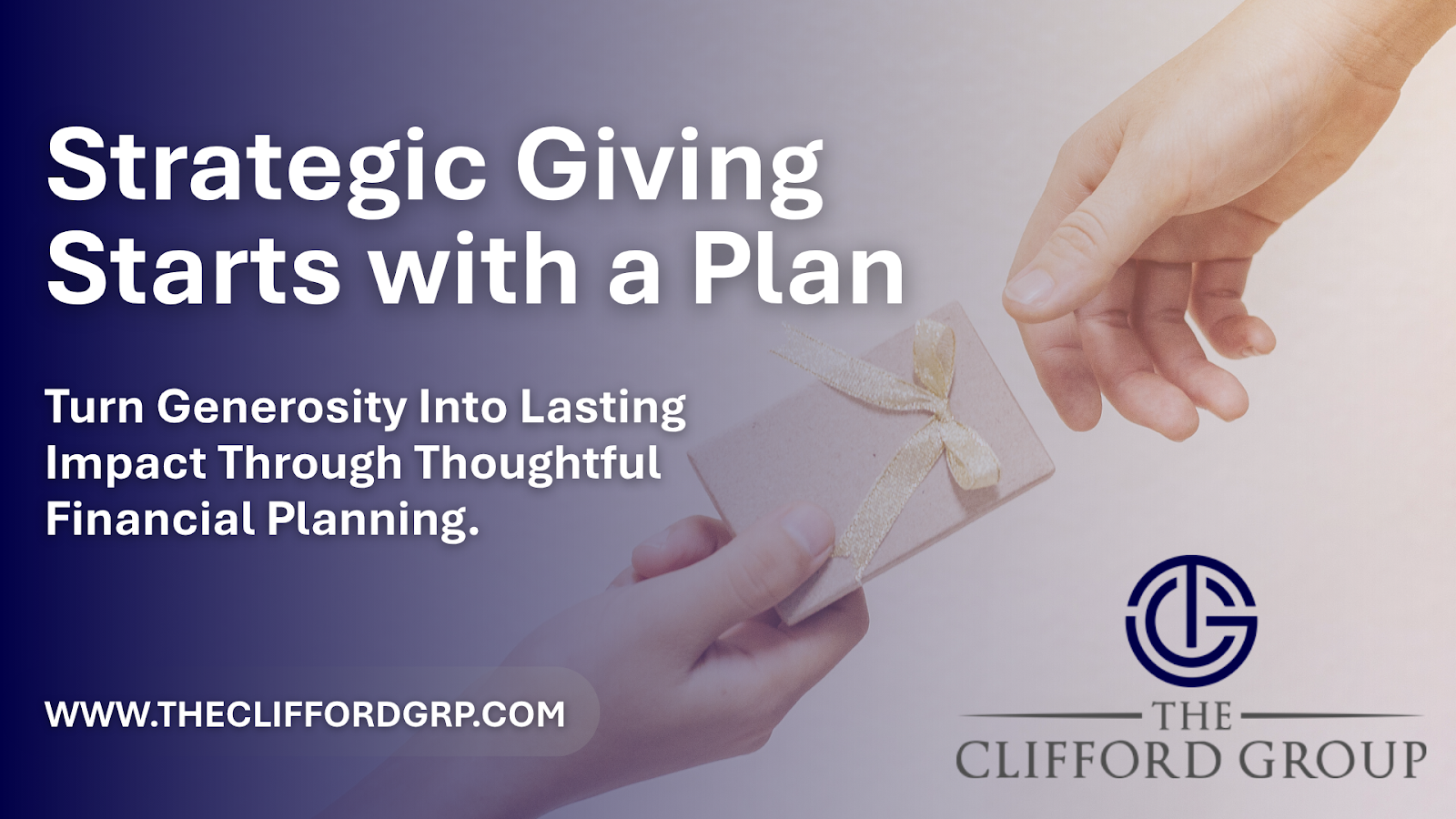
Strategic charitable giving allows you to bring structure, clarity, and intention to your generosity. It aligns your giving with broader goals such as tax efficiency, estate preservation, and family legacy. When giving becomes part of your financial plan, it transforms from a spontaneous act into a long-term strategy that reflects both your values and your vision.
Why Strategic Giving Matters
Charitable giving often enters the conversation after everything else is in place. Yet incorporating it earlier can strengthen many aspects of your overall plan. Giving can help reduce taxable income, manage capital gains exposure, and influence how wealth is transferred to future generations.
Strategic giving also creates a sense of purpose. Financial success can feel incomplete when it stands alone. Giving helps ensure that the wealth you have built carries meaning beyond accumulation. It connects what you have achieved to the difference you can make.
When generosity is integrated with planning, it brings both clarity and fulfillment. You gain the assurance that your financial strategy supports not only your goals but also the causes and communities you care about most.
The Tools for Strategic Giving
There is no single right way to give. The best approach depends on timing, tax considerations, and the level of control you want to maintain.
Direct gifts remain one of the simplest methods. They provide immediate support to charitable organizations and can create a tax deduction in the year the gift is made. Direct giving may not always align with a long-term strategy, but it remains an important and effective option.
Charitable trusts such as charitable remainder trusts or charitable lead trusts allow you to balance income needs with long-term charitable goals. These structures can provide income for you or your beneficiaries while ultimately directing remaining assets to charitable organizations. They require planning and professional guidance but offer meaningful flexibility.
Donor advised funds combine convenience with structure. They allow you to make a charitable contribution, receive an immediate deduction, and then recommend grants to qualified charities over time. This approach gives you the ability to separate the decision to give from the decision about where to give. For many families, donor advised funds offer an accessible way to practice structured, ongoing philanthropy without the administrative responsibilities of a private foundation.
Charitable Giving and Taxes
Generosity begins with intention, but planning ensures efficiency. The way a gift is structured can affect both tax exposure and long-term outcomes.
When appreciated securities are donated instead of cash, the donor may avoid paying capital gains tax on the appreciation while still receiving a deduction for the full fair market value. This approach benefits both the donor and the receiving charity. Making larger charitable contributions in years of higher income can also help offset taxable earnings.
Retirement accounts may also serve as a tool for charitable giving. Individuals aged 70½ or older can make qualified charitable distributions directly from an IRA to a qualified charity. These gifts can satisfy required minimum distributions and may keep that amount out of taxable income. These strategies ensure that generosity works in harmony with your broader financial picture.
The Importance of Timing and Liquidity
Charitable planning is most effective when it accounts for timing and cash flow. Major financial events such as a business sale, a stock option exercise, or a high-income year often create opportunities to make an impact while managing taxes efficiently.
For example, contributing to a donor advised fund during a liquidity event allows you to claim a deduction in the same year while distributing the funds to charities gradually. This approach gives flexibility to support meaningful causes without creating strain on liquidity.
When charitable giving is integrated with investment and tax strategies, it adds consistency and control to the process. Each decision complements the others, ensuring that generosity enhances rather than complicates your financial plan.
Involving Family and Building Legacy
Giving often becomes even more meaningful when it involves family. Many families use charitable planning as a way to share values, encourage stewardship, and create unity across generations. A donor advised fund or family foundation can serve as a platform for discussions about purpose and priorities.
Including younger generations in charitable decisions builds understanding about the responsibility that comes with wealth. It helps them see that financial success is not only about what you earn but also about how you use it. These conversations turn generosity into part of a family’s identity and help create a legacy that endures.
Common Mistakes in Charitable Planning
Even with the best intentions, charitable giving can lose its impact without a thoughtful plan. A few common mistakes to avoid include:
Rushing decisions at year-end
When giving is done reactively, it may overlook strategic opportunities or lead to less efficient outcomes.
Donating without evaluating impact
Effective philanthropy pairs emotion with analysis. Understanding how a gift will be used helps ensure that it creates the intended results.
Failing to revisit the plan
Life changes and so do tax laws. Reviewing charitable strategies regularly keeps them aligned with your current goals.
Overlooking liquidity needs
Generosity should never create financial stress. A sustainable giving plan supports both your personal stability and your philanthropic goals.
By staying intentional and reviewing decisions periodically, you can ensure that your charitable giving remains both impactful and secure.
Bringing Strategy and Purpose Together
The most successful financial plans treat charitable giving as an integrated part of long-term strategy, not a separate activity. When giving is planned intentionally, it enhances your overall financial structure by supporting tax efficiency, estate planning, and legacy goals.
Professional guidance is an important part of this process. Working with financial and tax advisors helps ensure that every gift aligns with your broader plan. Advisors can help evaluate the right vehicles for giving, determine timing, and coordinate with other elements of your financial strategy.
Giving That Lasts
True generosity is not measured by the size of a gift but by its purpose. Strategic charitable planning allows your success to create lasting impact while reinforcing the values that matter most to you.
When giving is built into your financial plan, it becomes more than a moment of kindness. It becomes a disciplined, thoughtful act that strengthens your financial position and amplifies your ability to make a difference.
Philanthropy brings meaning to wealth. It allows you to look beyond accumulation and see the influence your resources can have on others. That is the essence of giving that lasts—a legacy of purpose, clarity, and care that continues well beyond a single lifetime.
Important Information: The Clifford Group LLC (“The Clifford Group”) is a registered investment advisor. Advisory services are only offered to clients or prospective clients where The Clifford Group and its representatives are properly licensed or exempt from licensure. The Clifford Group and its advisors do not provide legal, accounting, or tax advice. Consult your attorney or tax professional. For additional information, please visit our website at www.thecliffordgrp.com.